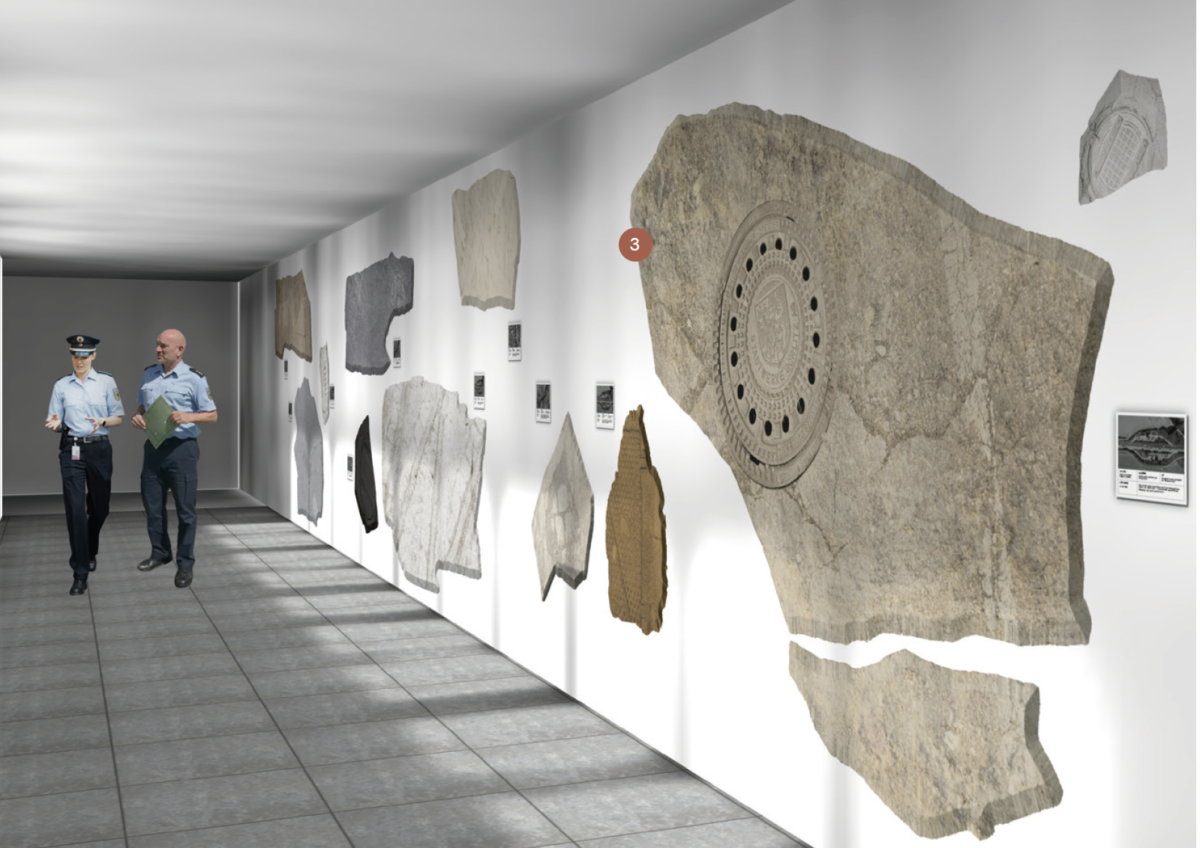
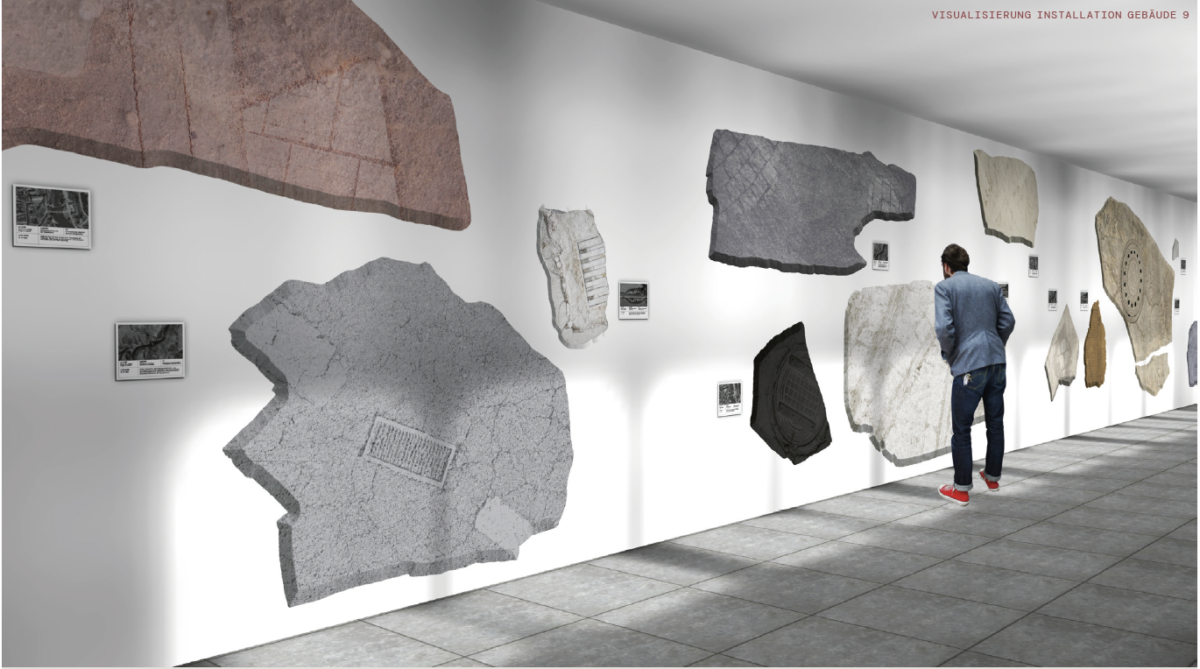
The border is not a place, but a condition. At the intersection of past and present, state and individual, the project charts an archaeological mapping of the invisible: sections of ground are cast at sites where history, control, movement, and uncertainty have left their mark — crime scenes, borderlines, holding patterns, and zones of standstill.
The concept for the wall installation draws on the everyday work of police officers in the border region — on roads, railway lines, and other transport routes. Here, the border does not appear as a line on a map, but as a shifting condition inscribed into routes, detours, checkpoints, and lines of flight. In this region, shaped by history, the Schengen area, migration, and political tensions, the ground itself holds memory.
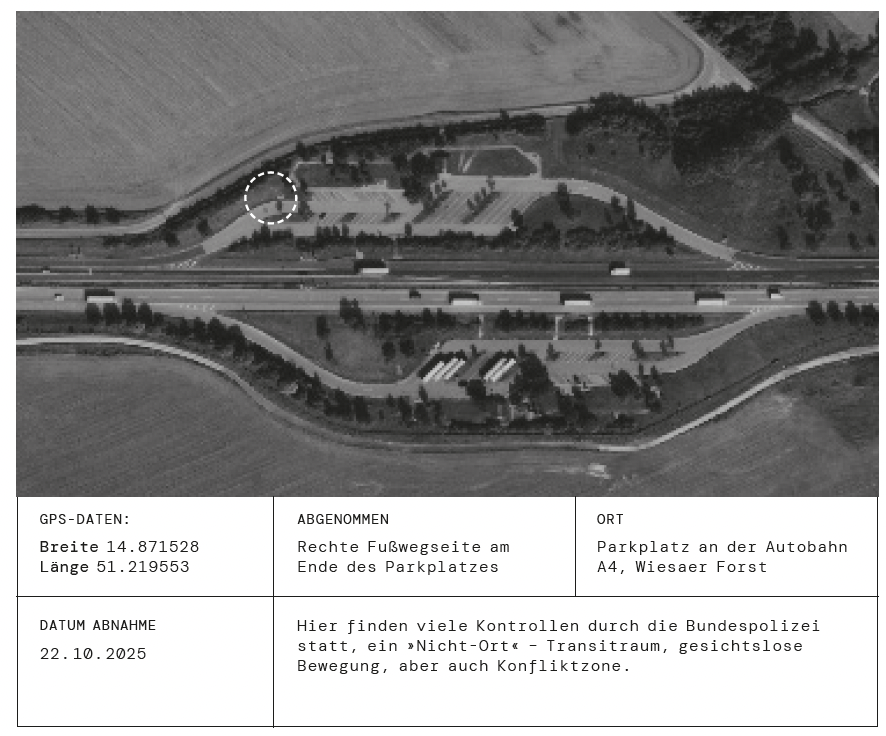
Through this project — ground casts taken from sites around the German-Polish border — the “road as workplace” of the Federal Police is made visible. Historically charged sites, crime scenes, and other significant spaces in the border region can be read as preserved traces of human action and collective history — a kind of archaeology of the future, in which social, political, and cultural tensions are sedimented. In a next step, these ground impressions are preserved for the future and transformed into fossils of the present through stone-like resin casts.
This process is inspired by Lusatia, a region known for its rich sedimentary formations — a kind of “archive of history” — where sandstone, claystone, limestone, slate, and, not least, lignite can be found.
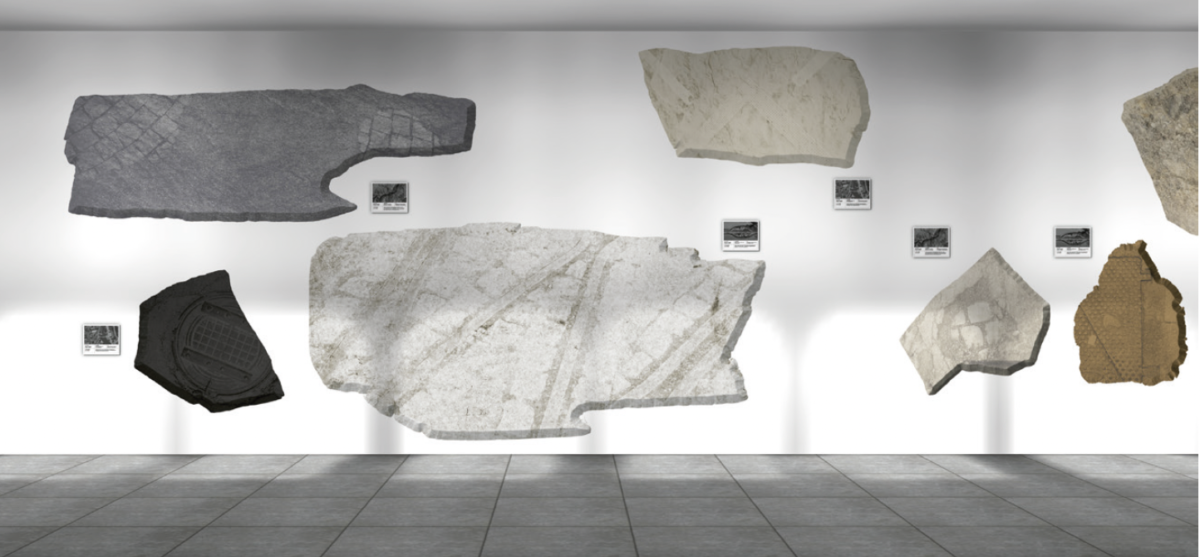
The resulting ground reliefs resemble geological finds, as if the topography of the border region had been excavated centuries later. They reveal grooves in paving stones, tire tracks, cracks, remnants of waste, tufts of grass — everything the ground is willing to disclose. The casts appear like fossils, preserving traces of human presence, absence, and tension.